GUITAR COURSE
ACOUSTIC
"Melodies that heal, joy that overflows.
A symphony of emotions,
timeless and whole."

COURSES
Acoustic Guitar



"Taking Water"
Blue Grass
Fast-paced and intricate instrumental arrangements with complex chord progressions and modal scales. Emphasis on vocal harmony singing and a lively feel.


Billy Strings
"Ten Year Town"
Folk Country
Simple chord progressions and melodies, storytelling through lyrics, fingerstyle guitar or strumming, and emphasis on vocal harmonies.

Hailey Whitters
"Hard Time Killing Floor Blues"
Country Blues
Fingerpicking style with walking bass lines and bottleneck technique, simple chord progressions and raw, emotional vocals.

Chris Thomas King
"Merry Go 'Round"
Singer Songwriter
Focus on personal expression and storytelling through lyrics and music with intricate guitar arrangements, melodic lines and incorporation of other genres.

Kacey Musgraves

COUNTRY
Learn to play acoustic guitar with a focus on country music! Our course covers four distinctive sub-genres: Bluegrass, country-blues, folk-country, and singer-songwriter. You'll learn fingerpicking, complex chord progressions, and the art of storytelling through music. Join us and master the guitar while exploring the diverse world of country music!


FINGERSTYLE
A technique in which the player uses their fingers to pluck the strings of the guitar instead of using a pick.
Fingerstyle guitar playing has roots in classical guitar music and other forms of fingerpicking, which date back several hundred years. It also has ties to various folk and blues traditions, particularly in the American South. The technique involves using the thumb, index, middle, and sometimes ring fingers to pluck the strings of the guitar to create melodies, harmonies, and bass lines.
"Back To Basics"


Seiji Igusa
"Photograph"

Ed Sheeran


Syllabus
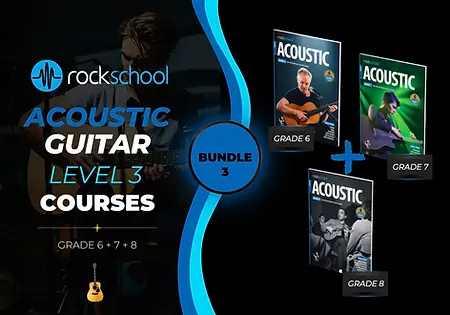
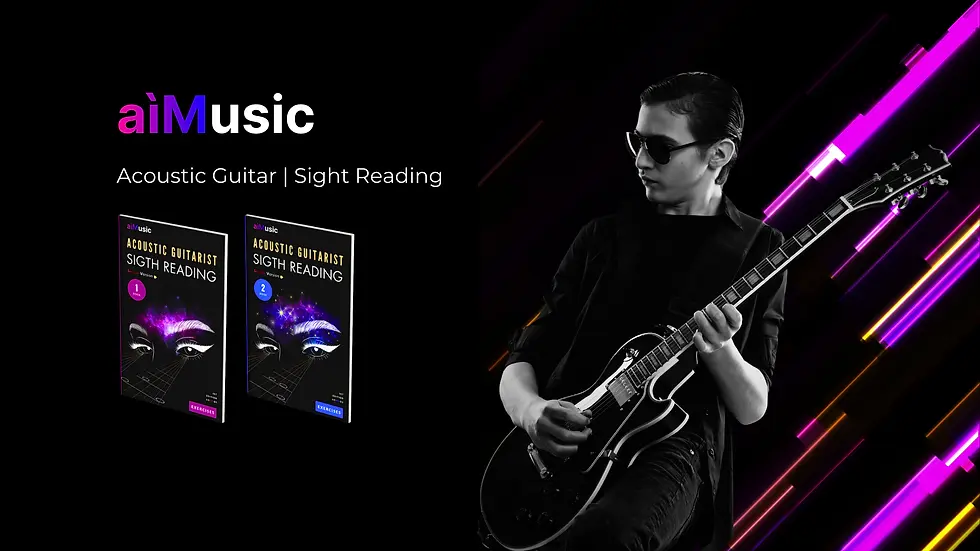
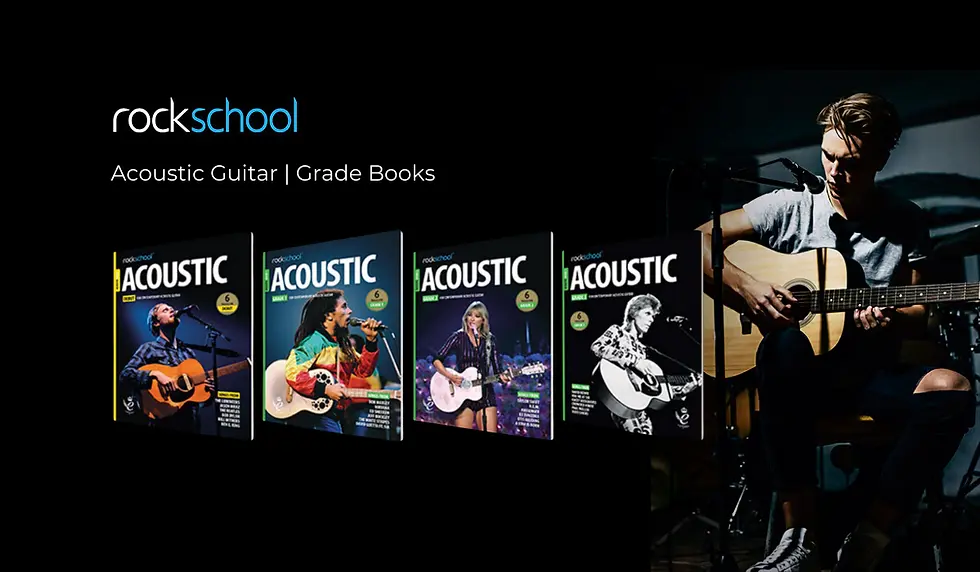
Discover our Acoustic Guitar courses.
From Custom to Exam Syllabus, catering to your needs.




Courses
Whether it's a holistic syllabus or a specific area of learning,
we got you covered!
AG Course Categories
BOBO AI’s aiMusic syllabus is rapidly emerging as one of the most talked-about innovations in Malaysia’s music education landscape, particularly across the Klang Valley. Positioned as a high-performance alternative to traditional music schools, the platform combines an accelerated learning pathway, tech-enabled instruction, and values-driven curriculum design to deliver measurable results in a fraction of the usual time. Its flagship promise — completing foundational grades in as little as three months — challenges the long-standing industry norm where students often spend six to twelve months on a single level. By compressing timelines without stripping depth, BOBO AI appeals strongly to goal-oriented learners, busy adults, and parents seeking tangible return on investment from music lessons rather than prolonged subscription cycles.
At the core of the aiMusic syllabus is an integrated learning architecture that embeds technical exercises, music theory, and fretboard theory directly into weekly song study. This “all-in-one” methodology mirrors how professional session musicians actually train: understanding the logic behind the notes while playing real music. The proprietary GEDCA fretboard system — developed as an alternative to the widely known CAGED approach — aims to solve one of the most common barriers for guitarists: navigating beyond basic open chords and mastering the entire neck. By teaching formula-based patterns for chords, scales, and note locations, the system positions students to achieve true fretboard literacy rather than repertoire memorization. This emphasis on understanding the instrument’s “map” transforms learners from song imitators into adaptable musicians capable of performing, improvising, and collaborating in real-world settings.
Another defining feature is BOBO AI’s blended learning model, which combines in-person coaching with an interactive practice app. The platform tracks progress, quizzes theory knowledge, and simulates exam scenarios, ensuring students arrive at lessons prepared for higher-level coaching rather than basic note reading. This data-driven accountability reduces knowledge gaps and practice avoidance — a common weakness in conventional lesson formats — while also enabling the program to scale efficiently across group classes in schools. Despite the name, the “AI” in BOBO AI refers to the Chinese character ài (爱), meaning love, reflecting a philosophy that technology should serve human passion rather than replace it. The curriculum’s “First Love” principle reinforces this by preserving students’ original enthusiasm for music while guiding them through structured, disciplined training.
The syllabus also distinguishes itself through a holistic musicianship approach that extends beyond technical skill. Lessons incorporate song history, artist background, lyrical meaning, and emotional context, encouraging students to interpret music thoughtfully rather than mechanically. Additionally, BOBO AI curates repertoire with positive, age-appropriate themes, a factor that has resonated strongly with Malaysian schools and parents concerned about the influence of explicit or negative content on teenagers. This content discernment strategy positions the program as a values-aligned educational partner, not merely a commercial music provider, strengthening institutional trust and adoption in SMKs and international schools.
From a pricing perspective, BOBO AI adopts an aggressive market-entry strategy. Bundle packages ranging roughly from RM300 to RM450 per month — often including full 60-minute sessions and app access — undercut many established music chains while delivering more structured content. Advanced grades are grouped into flat pricing tiers, an uncommon practice that benefits higher-level students who typically pay premium rates elsewhere. By condensing what would traditionally be nine months of lessons into three, the model sacrifices short-term revenue per student in favor of building a reputation for speed, efficiency, and results. This approach reflects a startup-style disruption strategy aimed at redefining expectations for value in music education.
While the program currently operates with an in-house syllabus rather than formal accreditation, this is widely viewed as a calculated move rather than a weakness. Students can still pursue recognized certifications such as Trinity or Rockschool exams independently once prepared, effectively combining BOBO AI’s accelerated skill development with established credentials when needed. For learners focused on performance ability, songwriting, or professional musicianship, the absence of immediate accreditation may be less critical than the promise of faster mastery. Over time, the platform’s data-backed progress tracking and student outcomes could support future recognition by educational authorities.
Overall, BOBO AI’s aiMusic system represents a forward-thinking shift from duration-based teaching to results-based learning. By integrating structured pedagogy, proprietary fretboard logic, blended technology, and character-focused content, it aims to produce musically literate, expressive performers rather than long-term hobbyist students. The model is particularly suited to disciplined learners who can commit to its high-intensity pace, as well as institutions seeking scalable, accountable programs. If sustained outcomes match its ambitious design, BOBO AI has the potential to redefine how music education is delivered in Malaysia — moving from slow, traditional pathways toward a faster, smarter, and more purposeful approach to mastering an instrument.
Guitar Anatomy
DETAILED
LEARNING
The headstock is located at the top of the guitar and holds the tuning machines
A thin piece of wood, marked with frets that divides the fretboard into different intervals.
The curved pieces of wood that connect the top soundboard to the back of the guitar body to provide structural support and overall tone.






A small piece of material that keeps the strings spaced evenly and at the right height above the fretboard.
Top Soundboard that transmits the vibrations from the strings to the air, which is what produces the guitar's sound.
The bridge transfers the vibrations to the top soundboard, which then resonates and produces the guitar's sound.


Tuning Sound Demo
INTERACTIVE
COUNTENT ELEMENTS